
Bookkeeping Cleanup Help when a month will not close
We match the operating bank, set payroll up on the company you already use, and hand you statements a person can read. Steven Palmieri takes the first call, and the month is done with you in the room.

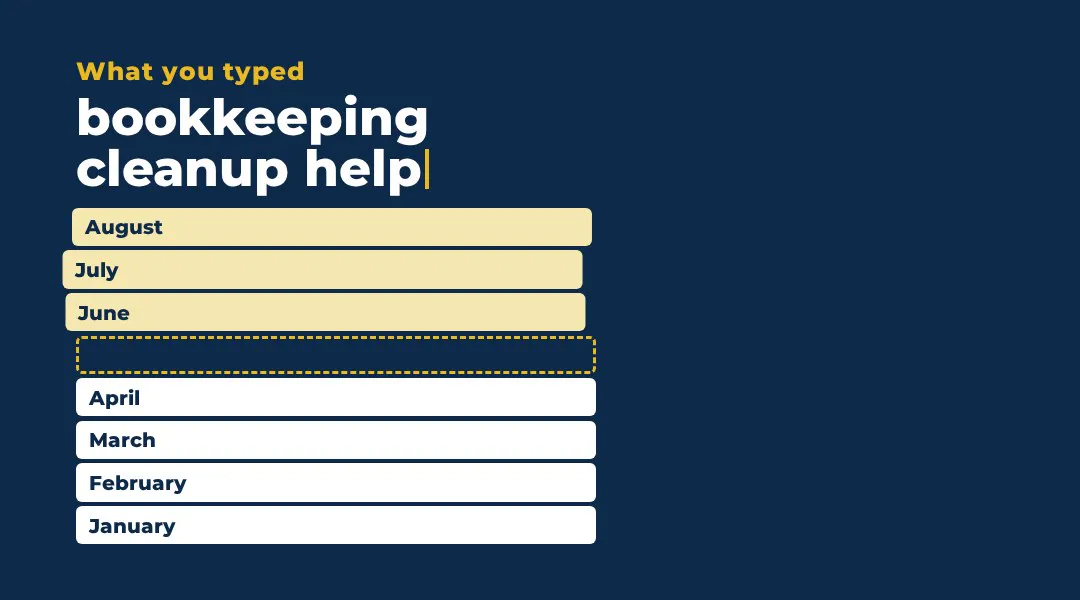
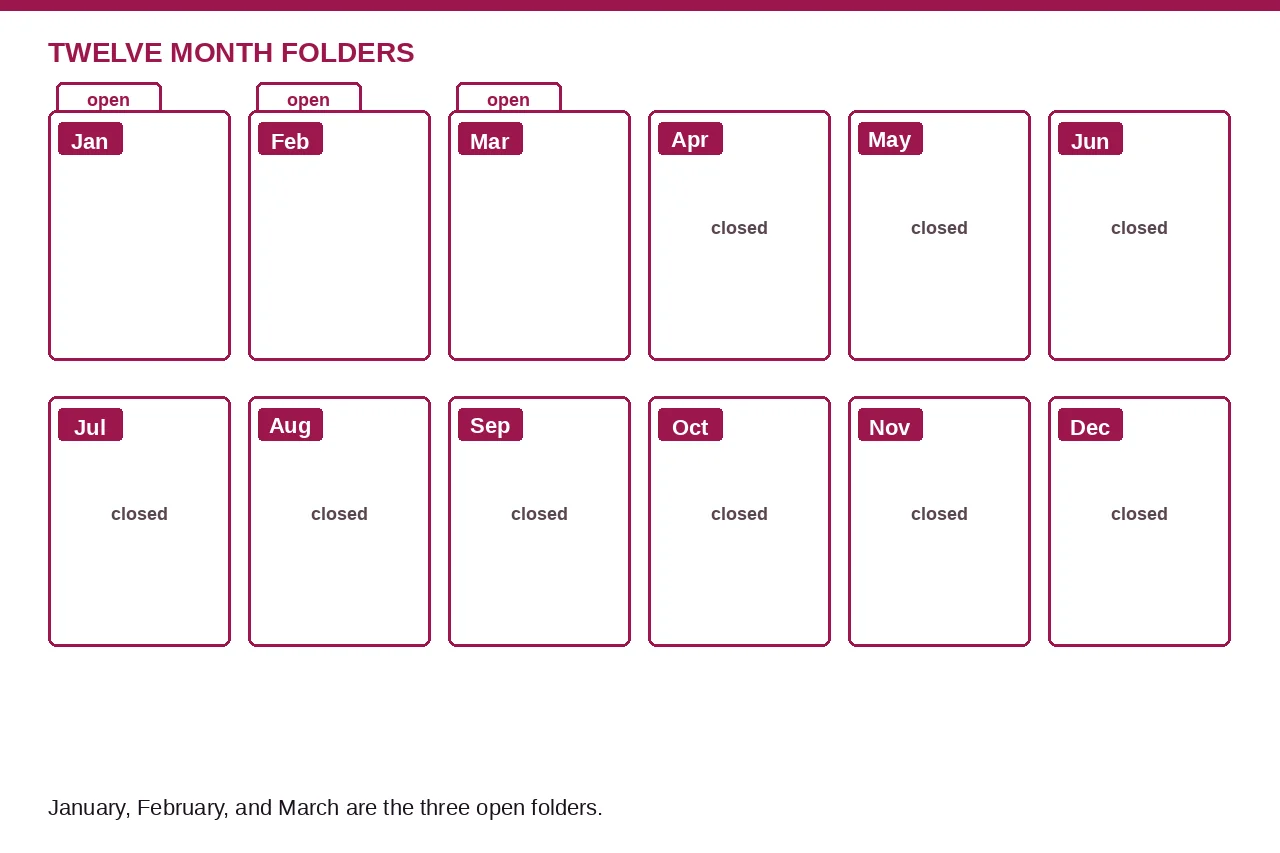
Which month is still open
You will be talking to the Steven Palmieri practice.
The Tax CFO way with a cleanup.
A bookkeeper cleans the old months. The Tax CFO starts from the year that was already filed, closes the first month the return did not cover, and uses that month to decide the estimate and the October plan, so the cleanup turns into a year you can run. The hole gets filled from the bottom, once.
The year already filed
A filed year is a story that already left the building, and the work starts after it.
Click to see the filed year ›Tap to see the filed year ›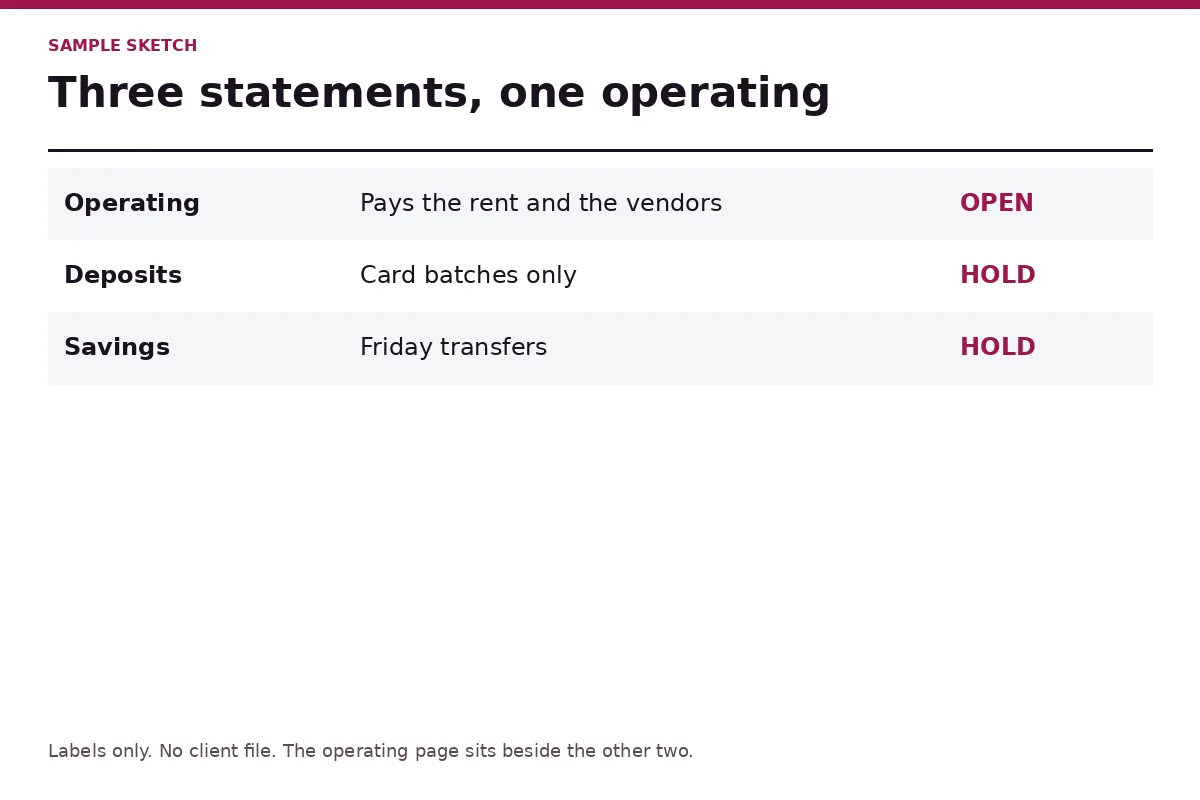
The bank that pays the bills
One account is operating, and it sits beside two others.
Click to name the bank ›Tap to name the bank ›
Months that never locked
An open month is one the bank has not matched.
Click to list the open months ›Tap to list the open months ›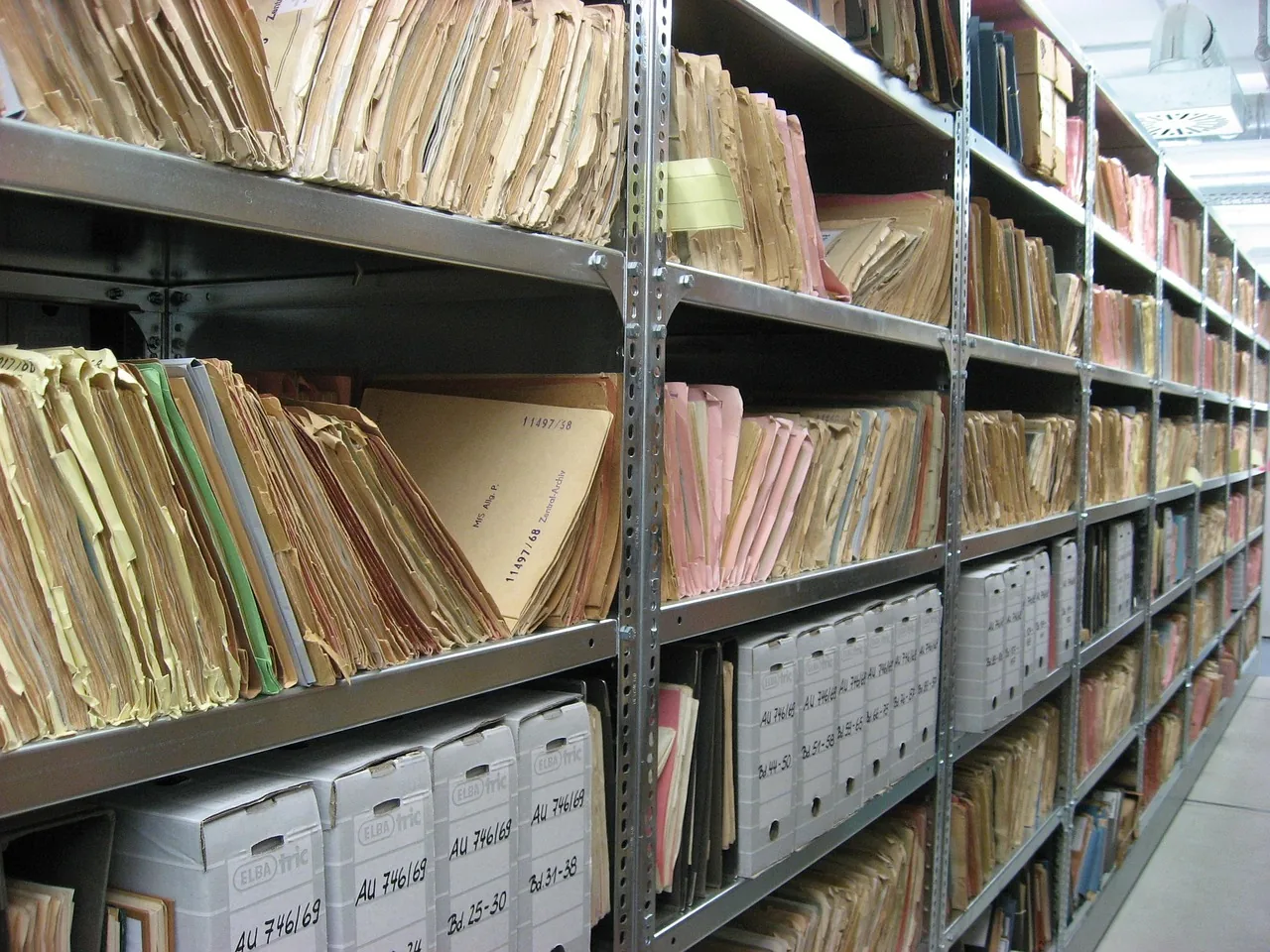
Keep the file, or hand it over
A short gap can stay with you.
Click to choose the handoff ›Tap to choose the handoff ›
A due date that will not wait
Estimates, deposits, and a state sales-tax date still arrive while a month is open.
Click to see the due date ›Tap to see the due date ›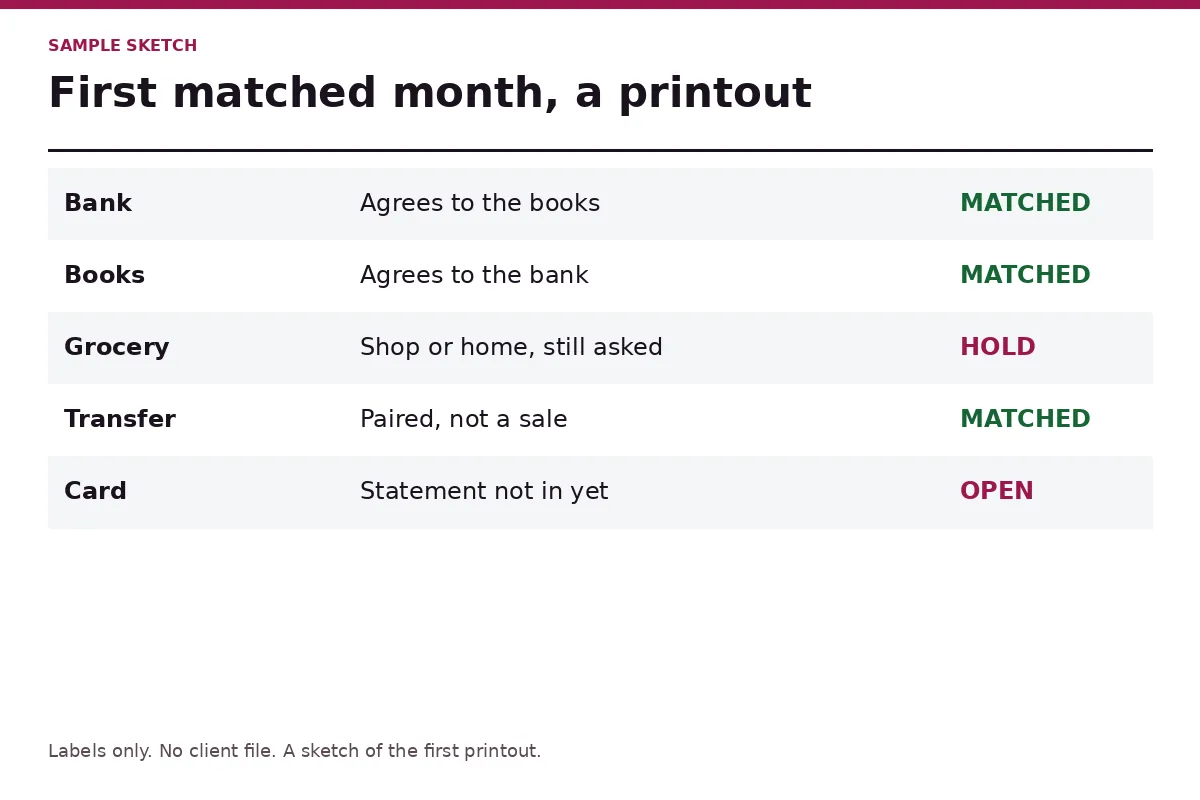
The first month that matches
One matched month becomes the pattern. Profit is what is left after that match, not before it.
Click to see the first close ›Tap to see the first close ›
Six notices that show up during a cleanup
A notice arrives on its own date. Open the one that matches the envelope you are holding.
1A balance due and no estimates paid
A balance due and no estimates paid
The year was lived without a quarterly payment, so April arrives as a surprise.
We size the next estimate from a month that has already been matched, not from a guess.
2A letter that names a missing form
A letter that names a missing form
The agency is asking for a page the file does not have yet.
We find the form number and the year before anyone retypes the books to make the letter go away.
3A payroll deposit that looks late
A payroll deposit that looks late
The provider's register and the bank line are telling two stories about the same payday.
Setup work names the deposit schedule. We do not rerun payday from this address.
4An information return that misses the books
An information return that misses the books
Contractors were paid, and the form that should list them does not match the checks.
The payee list is rebuilt from the bank, then the form follows the list.
5A deposit that is short of the sales
A deposit that is short of the sales
The processor kept a fee, a refund, or a chargeback, and the deposit no longer equals the day's tickets.
We tie the deposit to the batch, and we leave the fee on its own line.
6A prior year filed from the bank feed alone
A prior year filed from the bank feed alone
The return went in without a balance sheet, so the categories may not survive a question.
That year stays filed. The list of what it used is written down, and the new work starts after it.
Steven Palmieri
Tax CFO. The Entrepreneur's CFO.
What a cleanup changes in the file
The operating statement has to name the same deposits the books name, or that month stays unlocked and the one after it does not start. Unnamed money waits on a holding line until a document calls it a cost, a draw, a loan, or a transfer. Work begins on the oldest month that is still unlocked. The return follows that match. The cleanup writes down what that return used. Later months sit on top of that hole if you skip it. The hole gets filled from the bottom, once. We keep the month, the statements, and the return that waits on a closed month.
What we will not invent to make a month look finished
We will not call a grocery run a supply to pretty the feed. We will not call a deposit a sale when the report shows a fee. A missing paper stays visible, and that month stays open. Savings, a tax set-aside, and a personal card are not that account. A long gap, or a notice, is a reason to hand the file across.
Payday keeps its own company while the old months are open
People are still paid while older months are open. We set the payroll company up. You keep the login. The provider runs payday. The pay run never moves onto our login.
How the first closed month sets the October plan
The Tax CFO does not start by polishing the newest month. That year is left exactly as the agency already has it. The first month the return did not cover is the one that gets matched. That match is the bottom of the hole. Months above it wait their turn.
Once that month agrees to the operating bank, the estimate has a figure that is not a guess. October can use the same month when an extended return is the date on the wall. The plan for October is the close you already finished, plus the ordinary October statement, not a lump of older months poured into one screen.
The filed year is a story that already left. The operating bank is the one statement that pays the rent, and it sits beside the other two until you name it. The open months, the handoff, the due date, and the first match are the rest of the path. A later month that looks calm is still standing on whatever was skipped.
We will not fill the hole from the top. The hole fills from the bottom, the stack settles, and the next month has a pattern to copy. Bring the year, the bank, and the month you do not trust. Three names open the call. Steven Palmieri takes that call. The month is done with you in the room.
Bring the month that is in the way
Name the year you think was filed, the bank you think is operating, and the month you know is still open. Three names are enough to open the call.
Start from the open month
You will be talking to the Steven Palmieri practice.